


Advantages of Smart Home Automation in 2026
Advantages of Smart Home Automation in 2026
Smart home automation has become a very important element in modern residential and commercial spaces in 2026. What once was a mere luxury is turning into a smart way of improving comfort, enhancing security, saving energy, and making everyday life more comfortable and enjoyable through automation. Connected lighting, sensors, smart switches, climate control, security devices, curtains, entertainment systems, and centralized controllers make properties respond intelligently to the needs of occupants.
The main point of smart home automation is that it connects separate systems and makes them operate as a single ecosystem. Some of the main benefits of smart home automation in 2026 are as follows:
1. Better Convenience
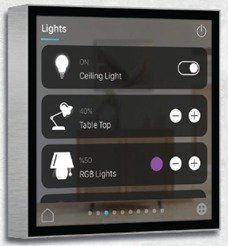
People still go for convenience as one of the main reasons for smart home automation. Instead of having to do the operation of the manual switches and devices one at a time, users can control multiple systems through a smartphone, tablet, touch panel, remote, or voice assistant.
For example, homeowners are able to switch lights on or off, adjust the room temperature, control the curtains, or start an entertainment scene without having to move from their spot. Automated schedules can also perform tasks that would be repeated without needing daily human intervention.
2. Intuitive Lighting Control
Lighting automation of the modern era offers so many more features than just turning lights on and off. A smart light system may regulate the light automatically, considering occupancy, the time of day, availability of daylight, and user preferences.
They can design light scenarios such as “Welcome,” “Dinner,” “Movie,” “Reading,” and “Good Night.” Moreover, dimming and automated switching not only enhance the atmosphere in different rooms but also, at the same time, prevent unnecessary energy waste.
For the bigger installations, KNX and DALI technology will be able to offer advanced lighting and building automation capabilities.
3. Better Energy Efficiency
Automation for energy efficiency remains a primary advantage in the year 2026. Smart systems could detect when spaces are inhabited and automatically control lighting and other electrical equipment.
4. Enhanced Home Security
With smart automation the level of residential security can be greatly improved.
A smart home security system consists of lighting devices, sensors, locks, smart cameras, alarms, and other devices that are connected.
For example, indoor and outdoor lights can be set to turn on when the residents are out, making it look like the house is occupied.
Also, smart locks allow for easy key management. Users can also get alerts through the app if their connected home system has motion-sensing features. However, features and notifications depend solely on the set-up and type of automation installed.
Users are not always the only ones who notice when a house is empty as well. Through connected apps you can get notifications and alerts that something might be amiss around the area of your residence.
5. Remote Monitoring and Control
The convenience of accessing and controlling your devices from virtually anywhere and the ability to keep an eye on the things that are dear to you are among the key attributes of an interconnected automation system. In particular, with the remote access feature of the system, when it has access to the internet that is secure, homeowners can check their devices or change settings without being on-site. This feature allows a homeowner to remotely check the state of the lights or adjust the lighting levels without setting foot back in their home; for instance, a homeowner might decide they want to know whether the lights are off at home or if they want to change the settings. The ability to access remotely would be very beneficial for second homes, cabins for holidays, offices, etc. Such properties may often remain unoccupied for long periods of time.
6. Personalized Comfort
In terms of lighting, temperature, entertainment, and ambience of the room, each person is unique and has his or her own preferences. However, through smart automation, you can program such preferences into customized scenes. For instance, a voice command could start off all lighting and curtain devices to create a movie night atmosphere. On the other side, in the morning, the “Wake Up” scene can slowly bring up the light in the bedroom and also wake up selected systems. In this way, a house not only adapts and meets the needs of its residents at different times of day or day-to-day situations but also feels like home because every detail is taken care of.
7. Better Commercial Space Management
Beyond homes, smart automation works wonders for commercial settings, including offices, hotels, restaurants, retail outlets, showrooms, etc.
Commercial lighting automation can help a business with its lighting schedules and controls depending on occupancy, meeting rooms, common areas, and display lighting. Different zones can be programmed according to their usage pattern and working hours.
Better space management and saving energy, at the same time, giving staff or visitors, as well as customers, more than a mere physical environment.
8. Combining several systems
If a system integration is one of the key points in modern automation, then a lighting system, climate control, a security system, and so on, being independent of each other and incompatible could mean a very cumbersome and time-consuming operation for an end user.
The integration between systems can be really beneficial. Take a ‘Leaving Home™’ example when lighting, thermostat, curtains, and security can be activated from a single source.
Having everything in one platform, not only is the operation simplified, but the user also has an option to get one-step control for the automation that works in their daily lives most conveniently.
9. Scalability and Future Expansion
This means that you can choose the right components according to your lifestyle needs rather than buying everything at once. If you have a small space that you plan to live in permanently, then you don’t have to install a very big and complicated automation system right from the start.
One can easily begin with lighting automation and at some point expand towards incorporating systems for comfort control, window shading, security, AV systems, entrance control & other systems.
The decision to opt for a modular system is going to pay back handsomely because it will make future changes a breeze.
10. Increased Property Appeal
A smart automated system can be another feather in the cap for a house or commercial building. Smart home features will definitely stand out in the eyes of potential buyers or renters who can also benefit through a more convenient and energy-efficient living environment, enhanced by the peace of mind from an upgraded security system.
A high-quality installation of a smart home control system could be one of the key selling points for luxury apartments, villas, offices, hotels, and high-end developments.
11. Automated Everyday Life
Smart home technology makes life a bit easier through automation that can handle a lot of the tasks in our daily life. Tasks that were once done by manual control or even forgotten can now be set to run at fixed intervals or when specific events are triggered.
For example, the lights can be programmed to turn on automatically at sunset or off if it’s too bright, pathway lights go on when motion is sensed, and some devices can just be programmed to switch off at nighttime.
The automation of home tasks is the way forward: less managing for the humans and more doing for those who prefer not to!
12. More Efficient Home Management
Much of the house manual control work goes unnoticed, and for a single person it can be a bit of a strain. Imagine then running a big home or commercial building manually! Automation has come to our rescue and brought centralized monitoring and control features that are not only user-friendly but also easy to manage. It allows the homeowner / office / commercial / hotel / retail property manager to be able to monitor and control multiple areas and devices simultaneously.
Facility managers can set up timetables that can be combined with the sensor information from the environment so that they become part of a programmed control mechanism that allows the building to operate in an extremely optimal manner.
This kind of automation is a major benefit not only in homes but also in commercial and retail properties such as offices, hotels, and retail stores, which are multi-functional or have variable usage patterns in different areas throughout the day.
Why Smart Home Automation in 2026 Matters
The smart home market is transitioning from standalone ‘connected devices’ to fully integrated home automation systems. Instead of just buying and using smart devices, consumers and manufacturers are focusing on how the connected world can be leveraged for more seamless interaction between the different systems and how devices can be controlled together.
Good automation is based on the needs and capabilities of a particular set of users. One of the reasons why a house, for instance, is automated with smart technology is that it is easier to manage the house, it’s faster to locate a problem from home via mobile app, the energy saving is better when a house is smartly managed, and also the security and overall comfort are increased. In fact, when the right kind of smart home automation is introduced, the result is that a house is easier for anyone to manage, and it’s also a more secure place for the family living in it.
No matter if the aim is light control, energy savings, home security, or total automation, one of the main reasons it works the first or second time around in most homes is good planning by a trained professional.
Final Thought
In 2026, home automation systems offer many more features, functions, and services than smart devices could have imagined before.
Apart from simply making a house or an apartment look and feel better through intelligent light control, a smart home system should also be a source of comfort and safety through various services that can be activated without much effort.
By integrating remote control, monitoring, and management features in one place, smart homes allow one of the most advanced living environments today.
It is obvious from the continued development of technology that smart home automation will become a practical investment for homeowners, businesses, architects, and property developers who want to design energy-efficient, cozy, well-connected, and future-proof homes or spaces.