

Smart Home Automation: Transform Your Home with Intelligent Technology
 Smart Home Automation
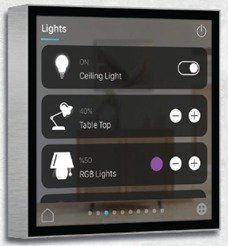 Smart Home Automation
Smart home automation is reshaping the way humans live, work, and connect with their living environments at a fundamental level. It is now possible to switch lights using a mobile phone and let house gadgets do the rest automatically, such as regulating temperature, closing curtains, running safety systems, and turning on entertainment gear. It is a way for contemporary homeowners to live more simply and securely and to save on the electricity bill as well.
Through a central automation system, a professionally built smart home links together several domestic and electronic systems. Residents may access them via mobile apps, touch panels, voice commands, sensors, or programmed schedules. Smart technology is rapidly getting cheaper, and thus smart lighting automation is quickly turning out to be a favorite among both residential and commercial premises for a reason.
Diving Deep Into Smart Home Automation
Smart home automation is simply the linking of different home systems so they have the capability of communicating with each other as well as being controlled automatically. There would no longer be a need for a user to separately interact with each device, as they can conveniently access one interface to be able to manage lighting, central heating and cooling, window treatments, home security, and entertainment as well as other systems.
An illustration that the smart home system could provide is automatically powering on certain lights, changing your home’s temperature, opening motorized curtains, and setting the right lighting ambiance for you just as you walk through the door.
Similarly, upon your departure, your smart home will automatically shut down the lights that are not really needed and electrical devices but also turn security system features on at the same time.
The unique mixture of both comfort aspects and automation control is exactly the kind of feature that modern apartments, villas, luxury homes, offices, hotels, restaurants, and commercial buildings find it worthwhile investing in automation systems to take advantage of.
Smart Lighting Automation for Houses of the Present and Beyond
One of the key elements that define a house is its lighting. With the help of smart lighting automation, people can change the brightness of one light at most or of an entire zone of lights following their mood, activity, or daily requirements.
Homeowners no longer have to go to each light to turn it on or off manually; they can use the Smart Home Lighting System to create their own schedules and scenes. Lights can, for instance, turn on automatically at sunset, dim during movie time, or switch off when nobody is in a room.
LED lights, dimmers, sensors, smart switches, controllers, and centralized control platforms are among the components of a well-designed smart home lighting system that can be used simultaneously to offer even more control over brightness, timing, ambiance, and energy consumption.
A “Morning” scene where bedroom lighting gradually increases, a “Movie” scene that dims living-room lights, and a “Night” scene that only keeps essential pathway lighting active are just some of the possibilities that can be set by a homeowner using a Smart Home Lighting System.
Smart Lighting Control System: More Convenience and Control
The key benefit of using a smart lighting control system is that it gives you centralized lighting management of your property. In the case where the automation platform is connected to the smart lighting system, you will also be able to light up with smartphones, tablets, wall-mounted touch panels, remote controls, voice assistants, or automated sensors.
A fairly big advantage is flexibility. Users can turn lights on and off either individually or in groups and scenes. That is especially great for big homes where it is a challenge for lighting circuits and rooms to be managed without waste of efforts.
Additionally, smart lights might automatically react to environmental situations. Through sensors, lights can turn on when motion is detected and then turn off when someone is no longer there. Daylight sensors can reduce electricity use if you are still lighting the room when daylight is enough.
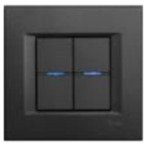
Smart Home Automation Features
Home automation with smart features is able to bring many benefits for people living in houses and businesses.
1. Convenience
Housekeeping chores and everyday activities are less of a problem when you use automation.
Through remote control from one device or by setting up automated schedules and by activating sensors, one can manage a variety of electronic devices simultaneously.
2. Cost savings by energy efficiency
A well-designed intelligent system can effectively help in decreasing unnecessary electricity usage. Lighting is the prime example. It can be done via setting light switching off automatically when nobody is present in the room and decreasing light level to low when full illumination is not needed, thus saving energy.
3. Better Protection
With smart lighting and security systems you get an extra level of protection. If there is no one at home, the smart lighting can be timed so as to give a sense of occupancy. Smart locks, cameras, and alarm systems can all become part of an automation system if a homeowner likes.
4. Increased comfort
Different home owners would have different likes. Using smart technology, a device owner can design different scenes for each purpose, which may be relaxation, movie time, workspace, eating, etc.
5. Having access through an application remotely
If the automation system is connected to the Internet, it is entirely possible for the homeowner to control and check the state of some devices remotely. For example, it could be that the customer wants to come home a bit earlier and therefore to know the house condition or manage property.
Lighting Automation in Office and Business
Beyond domestic settings, smart technology has also found a place in commercial properties. One such area is commercial lighting controls.
Office, retail, hospitality, service, and educational buildings, among many, are commercial buildings that can benefit from a well-implemented lighting control system. Such a system can also help a company save its time or efforts that would otherwise be needed for managing lighting fixtures of a very large number.
In case lighting systems are programmed with schedules, they can be made not only to turn on but also to go back to an ambient mode or turn off.
As an example, an office building that uses smart lighting can have areas that are automatically lit up for employees who stay in the office late on the last day of the week or after an exceptional meeting, etc. The lighting control system can also be integrated with other sensors to switch on lights when no one is around.
In other words, commercial automation is the means by which a company can be assured that the building’s lighting is being used in a most efficient manner at all times. It can help the business lower the electricity use and expenses.
For instance, an office could have lighting switched on automatically just before the staff comes in and then switched off during breaks and holidays when there are no people around. Meeting rooms can be equipped with occupancy sensors, and reception areas may be programmed separately.
Shopkeepers will also be able to design various lighting scenes that would draw people’s attention to the displays and products they are showcasing. Hotels can combine their lighting systems with the guest-room controls, which will make the guests’ stay much safer and enjoyable.
If lighting automation could be made to happen by detecting presence or by schedule or by operational conditions, it would help to achieve energy management and also improve user experience.
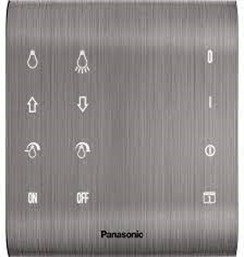
How Does a Smart Home Lighting System Work?
Most smart home lighting systems come equipped with multiple devices that are networked and interdependent. You may see smart switches, dimmers, LED drivers, sensors, controllers, gateways, communication modules, and a central automation platform included in such systems.
Besides this, depending on the nature of your project, it is quite possible that you will use technologies like KNX, DALI, Zigbee, Wi-Fi, Bluetooth, or even any other automation protocol.
The selection of the technology is largely decided by aspects like the area of the property, the quantity of devices, the level of functionality, the type of installation, the ability to scale, and, of course, the budget.
Expert planning is key, as each project entails distinct electrical and automation demands. A well-planned solution offers excellent performance and at the same time allows you to plug additional units and functionalities down the line.
 Smart Home Automation for New and Existing Properties
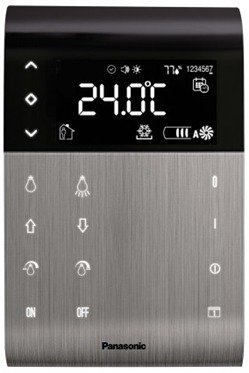 Smart Home Automation for New and Existing Properties
Smart automation systems can be put in place not only in a newly built house but also in existing ones. When the house is a new one, the automation wiring and the backbone can be designed together with the construction, and hence, much higher degrees of multi-system integration are attainable.
On the other hand, older homes may equally benefit through retrofit smart solutions. Wireless and hybrid systems can largely mitigate the requirement of major electrical changes.
A house owner can better be a home automation user if they also plan their needs in phases with respect to the time and possible expansion. It may, therefore, start with the lighting system first of all, then curtains, climate control, security, audio-video, etc. Step-by-step addition of various systems would be a very workable plan.
Choosing the Right Smart Home Automation Solution
In selecting an automation system, you should think about the size of your home, your existing wiring, how you would like to control things, your budget, and what else you may want in the future.
It is very important that you are able to rely on quality hardware and partner with automation experts. An optimal choice is one that allows easy handling, has a possibility of getting larger later, and is a trustworthy technology that works for the house itself.
Instead of just focusing on the number of gadgets to be installed in a smart home, people need to see how well gadgets function together. The objective of implementing smart automation shouldn’t merely be to add gadgets but to provide comfort, efficiency, and intelligence in the home environment.
Conclusion
Smart lighting is an essential element that is integrated with security and climate control, curtain control, entertainment, and other systems to create a smart connected home environment.
Smart Lighting Automation is a good place to start with these types of solutions because lighting not only brings comfort and enhances ambiance, but it is also one of the ways that energy is consumed, so lighting efficiency would directly result in cost savings and also convenience of everyday life.
No matter whether it involves a luxurious villa with a swimming pool, a small apartment, a modern office complex, a grand hotel, a retail space, or a commercial establishment, it is always better to let a well-experienced lighting professional carry out the planning.
Such a professionally designed solution would offer centralized control and efficient automation. Features like lighting scenes that reflect mood or settings, control systems based on the presence of a person, and other smart home capabilities will all contribute to a more efficient, comfortable, and user-friendly property.
With the rapid advancement of smart technology, making an investment in a scalable smart home lighting system or commercial lighting automation solution will surely help in creating spaces that remain technologically advanced, yet comfortable, practical, and energy-saving.