


What are the top 5 home automation systems?
Smart home technology is rapidly evolving, making it easy for users to automate and control home functions like lighting, security, climate, entertainment, curtains, and more. Instead of dealing separately with each device, a smart home system allows different devices to get together via one central system of control. You have a choice to connect via sensors, switches, apps, voice assistants, or any other central systems.
For homeowners, architects, interior designers, hotels, offices, etc., in India, selecting the automation technique that suits best will not only offer comfort but also result in saving energy, scalability, and ensuring a reliable and long-lasting experience.
What Are Home Automation Systems?
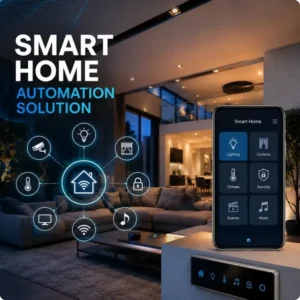
Some of the main home automation technologies and platforms include:
- KNX: Best choice for professional and wired building automation Zigbee: Flexibility of Wireless Smart-Home Devices is its major strength DALI: Superior Lighting Controls Tuya Smart: App-based & Affordable Smart-Home Automation Leader Wi-Fi-Based Smart Home Systems: Best for simple connected devices and smaller installations
You will make the right decision regarding the system based upon your property size, type of automation, budget, wired connections, number of devices, and the level of control you wish to have from a central system.
The major standard for both professional home automation and building automation is KNX. Through integration, one automation system of KNX can handle different functions like lighting, HVAC, blinds, security, energy management, and other building services.
The most appropriate application of KNX is probably the new homes and high-end residential developments. Since in those projects, reliability and the concept of having everything centralized are crucial.
Main features of KNX
- You can control your whole home from a single control point: centralized home automation
- You have complete authority over lighting and scene controls
- Heating, Ventilation & Air Conditioning (HVAC) controls are integrated
- Automate blind and curtain movements
- Efficient energy management
- Occupancy sensors and controllers
- Large-scale properties can easily expand on it
- It can be used in residential as well as commercial buildings
Take, for example, the way in which a homeowner makes a new “Nighttime” scene that turns off the chosen lights and also closes the automated curtains, then sets the heating/AC at the right temperature and activates the security functions of the house in one and the same command.
KNX Suitable for Whom?
KNX fits well for:
- Bespoke Homes
- Villas, Mansions, and Private Residences
- Apartment Complexes and Housing Units
- Hotels
- Offices
- Big-scale residential developments
- Commercial Real Estate Properties
2. Zigbee Home Automation
Zigbee has emerged as a widely accepted wireless communication technology that many smart home products rely on. Its low-power, two-way communication capabilities make it perfect for connecting smart switches, sensors, lights, plugs, thermostats, and other similar devices.
If a homeowner desires to install a wireless automating system that doesn’t require a complete replacement of the traditional wiring system, Zigbee will be an option worth considering.
Advantages of Zigbee
- Wireless connection
- Low power requirement
- Smart sensors
- Light switch or control system with automated light turning or lighting features;
- Limits of motion, door, or window opening;
- Motion sensors
- Smart switches and power plugs
- Easy-to-identify and install
A Zigbee system can significantly make your daily routine automatic. To give you an example, a motion detector is capable of identifying a person’s movement and then automatically powering the hallway or bathroom light.
Is Zigbee good enough for Indian houses?
Zigbee can work for all types of Indian homes, like apartments, villas, and even shops, and retrofit projects in general if wireless wiring is preferred. One example is the retrofit of an existing wired system to become wireless through the Zigbee technology.
3. DALI Lighting Automation
The DALI, or Digital Addressable Lighting Interface, is mainly for complex digital lighting control systems.
DALI does not cover complete home automation, as it only deals with lighting; however, it is very helpful for projects that demand fine-level control of individual lights, sets/dimmers, and lighting scenarios.
DALI provides the following:
- Lights are controlled individually
- Controlling the lights in groups
- Adjusting light to desired levels (dimming)
- Lighting scenes / Light combinations
- Schedule / Automated timings
- Efficient use of energy for lighting
- Combined with the building automation
DALI is a highly preferred solution for areas such as luxury residences, hotels, offices, showrooms, and commercial buildings where lighting design constitutes a major part of the atmosphere.
Taking our living room as an example, it can have different lighting scenes, namely, morning, evening, movie, party, and day.
4. Tuya Smart Home Automation
Tuya Smart is a popular home automation platform that supports various connected devices and apps that control smart devices and automate their functions.
It might be a good thing if the homeowners want the convenience of smartphone control without the inconvenience of having to install a complex building automation system.
Depending on the products they install and the installation, the users can control:
- Smart lights
- Switches
- Plugs
- Sensors
- Curtains
- Appliances
- Security devices
- Thermostats and other connected equipment
They can also set timers and design an automatic routine. For instance, the lights outside can be set to turn on automatically in the evening and go off at a certain time.
Why choose Tuya?
Tuya is also a feasible option, e.g., when:
- Apartment
- Small homes
- Rental properties
- Retrofit projects
- Smart-home system installations that are on a low budget
5. Wi-Fi-Based Home Automation
The use of a Wi-Fi-based automation relies on the existing home Wi-Fi network to connect the devices that are compatible and are also smart.
Among many things, Wi-Fi-based smart devices that are popular include:
- Smart bulb
- Smart switch
- Smart plug
- Device camera
- Doorbell that is intelligent enough
- Smart refrigerator, oven, washing machine, toaster, and so on
- Sensor
- Entertainment devices
A homeowner is best served starting to automate the house by the use of a few devices and then gradually expanding the device number.
But for bigger installations it is important not to forget issues related to network capacity, interoperability between devices, cybersecurity, reliability, and centralized control if only one pure Wi-Fi method is adopted as a basis.
Which Home Automation System Is Best for a Luxury Home?
In the case of a luxury residence, KNX might be the right choice when you want comprehensive and professionally built automation. It can be used to control lighting, climate, blinds and other windows, sensors, security, and even energy management together.
But it is also possible that combining systems or using a multi-system approach might prove better.
E.g.:
KNX + DALI + compatible smart devices
Together they are quite a combination of a centrally managed and automated building, with full and intricate control over lighting, etc.
Naturally, the choice will depend on many factors, including the project’s technical specification related to the design of the house, architecture, automation requirements, and plans for the future enlargement. There is just no “correct answer” except for the one that suits your needs.
Home Automation Products by Sarlux Electronics
Sarlux Electronics is committed to providing smart lighting systems as well as home automation products that cater to both the home and non-residential markets.
Their automation systems can be adapted to different kinds of automation technologies, such as KNX, Zigbee, DALI, Tuya, etc., depending on what is being delivered for the project.
Sarlux Electronics can provide assistance on the following automation functions:
- Controllable intelligent light
- Dimmer and scene lighting
- Smart switches
- Operates curtains and blinds
- Automatically controlled devices based on sensors
- Home automation
- Monitoring and managing energy consumption
- Lighting control at a distance
- Control system and automation for the entire building
Consumers and professionals handling projects should carefully consider the mix of technologies that will allow them to enjoy not only the convenience but the performance as well in the long run.
How Home Automation Works?
Home automation systems usually contain these four main parts:
1. Sensors
Sensors detect the surroundings.
Motion
- sensors,
- presence sensors,
- temperature sensors,
- light/dusk sensors,
- And door/window sensors are the examples.
2. Controllers
Through processing the data received, this component decides what to do.
3. Actuators and smart devices
These devices take care of the desired act.
Example:
Someone coming in → Controller receives a signal → Light comes ON.
4. User Interface
Homeowners can control the system via:
- Wall-mounted switches
- Touch screen panels
- Phone-based apps
- Remote controllers
- Intelligent assistant voice
- Central control systems
What are the benefits of home automation?
Well-planned smart-home design can be really beneficial in several ways.
Comfort
All functions, including lighting, temperature, curtains, etc., can be made to run automatically according to user preferences.
Saving
Bulbs left burning unnecessarily can be turned off along with idle equipment usage by having a system that uses both programmed and sensed modes.
Security
Sensors (like door, window, smoke, etc.), cameras, access (locks and alarms), and lighting systems that automatically turn off if there is no one in the house—all add up to a comprehensive security approach.
Personalization
Residents will have the freedom to create their own scenes depending on what routine they like.
Example:
“Welcome home” scene might be set to a specific set of lights in the living area only, then slowly the light spreads over to the rest of the house. Also, curtains get opened a bit and other favourite gadgets can get activated.
What is the cost of installing a smart home in India
The price of such systems can be really varying when it comes to the home size, technologies involved, total number of devices included in the system, cabling needs, choice of brands, and also the amount of customization.
Wireless home automation of basic type should not cost as much as a high-end luxury villa complete KNX automation system.
Price can also be dependent on;
- Rooms
- Number of light fittings
- Number of electrical switches required
- Presence of motion or presence or smoke or door sensors
- Operation of motor driven curtains
- Integration with heating ventilation air conditioning system HVAC
- Control of lights
- Control units
- Internal wired communication
- Installation and mounting expenses
- Computer programs that can be executed to customize the home automation system
- Combination with other home systems such as the security and entertainment ones
That is why, it is best to ask for an quotation according to the house characteristics as opposed to a standard price on a room basis.
Guide on Selecting a Suitable Home Automation System
Ask these questions first before you decide to go for any home automation systems:
1. Has the house been constructed already, or it is still under construction?
Wired systems like KNX may be more conveniently laid out when the house is being constructed. However, wireless systems may be the way to go if it is a retrofit job.
2. How many appliances are to be automated?
If you just have a couple of smart devices, perhaps getting a sophisticated central system is not needed.
3. Should lighting control be automated?
In case lighting is your top concern, considering adopting DALI would be a great option.
4. Are you looking for whole building automation?
To cover all bases, professional systems like KNX can be a smart choice.
5. What is your level of spending?
Choosing a technology should take into account both your present needs and possible developments you foresee in the future.
6. Is the availability of a local contact important?
It is recommended to have a local contact for installation, programming, commissioning, and servicing especially if the project you undertake is expected to be long term.
Popular Questions in Home Automation
Which are the top five home automation systems?
Home automation systems such as KNX, Zigbee, DALI, Tuya, Wi-Fi, and Wi-SUN are widely used in smart home projects. Each of them has different advantages and uses.
What is the best home automation system?
It is difficult to pick one universal home automation system as the best option. KNX might be very much suitable for professional large-scale automated buildings. In such applications, KNX is the standard choice by building automation industry. DALI on the other hand is very suitable for lighting control. Zigbee, Tuya and Wi-Fi are the wireless options to be preferred if we want to install a flexible home automation system.
How does the KNX system compare with Zigbee?
In fact, KNX and Zigbee are not comparable because they are designed for entirely different applications. Whereas KNX has been the backbone of professional house automation industry for many years, a lot of smart appliances have opted to communicate via Zigbee which is actually a low power wireless communication. Ultimately, the decision between these two systems will depend entirely on the purpose of the user.